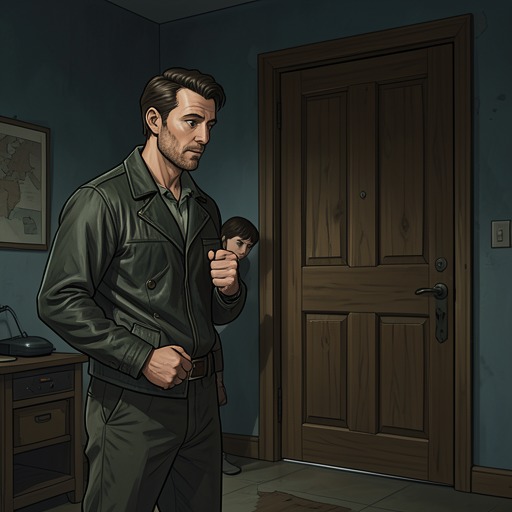
Aditha Karikalan’s remorse over Veera Pandiyan’s death
Ponniyin SelvanAditha Karikalan’s remorse over Veera Pandiyan’s death turns an act of wartime violence into a continuing personal obligation. Three years after killing Veera Pandiyan, Karikalan tells Malayaman that he cannot find peace until he asks Pazhuvoor Ilaiya Rani’s forgiveness; the confession explains why he accepts her invitation and makes his journey to her more than a political errand.
The wound and its cause
Karikalan recounts the killing as a sequence he has been unable to escape: he hunted Veera Pandiyan, tracked him to a secret lair, and faced Pazhuvoor Ilaiya Rani’s frantic plea that he spare Veera Pandiyan’s life. Karikalan rejected her appeal in anger and beheaded Veera Pandiyan. His account does not present the death as a remote military deed; it places his refusal of mercy at the center of the memory that has haunted him ever since.
The remorse has endured for three years. As he describes it to Malayaman, memory, despair, and intense sorrow remain bound to the same incident. Karikalan says he has never been able to wipe it from his mind and can find no measure of peace without seeking forgiveness. The confession makes the persistence of the wound concrete: it returns not as a passing regret but as an unresolved demand that shapes what he must do next.
The decision to seek forgiveness
Malayaman asks why Karikalan would accept Pazhuvoor Ilaiya Rani’s invitation if he is not guilty of the political treachery suspected of him. Karikalan’s answer is personal rather than strategic. He says that he once caused her grievous harm and intends to make reparations by begging her pardon. Her invitation gives him the opportunity to face the person whose plea he rejected, while the memory of Veera Pandiyan’s death supplies the reason he believes he must go.
Karikalan also distinguishes this act of atonement from his public responsibilities. He intends to fulfill his obligations, return to Kanchi as soon as possible, and then set out by ship in search of his brother. The sequence matters: seeking forgiveness does not replace his duties or his effort to find his brother, but becomes an urgent obligation he means to discharge before resuming them.
Confession and changed understanding
The disclosure changes Malayaman’s reading of earlier events. After hearing the detailed account, the older man says that much he had not understood now makes sense, including events whose motives he had failed to discern. Karikalan’s remorse therefore has consequences beyond his private conscience: speaking about the killing supplies Malayaman with a motive that helps him reinterpret the surrounding history.
Malayaman’s response ends on the limits of human agency, as he concludes that no power on earth can defeat destiny. The exchange holds together Karikalan’s deliberate choice to seek pardon and Malayaman’s sense that events have been governed by forces beyond any person’s control. The remorse remains unresolved, but its disclosure gives it direction: Karikalan will confront the past by asking forgiveness, even as he prepares to return to his obligations and search for his brother.